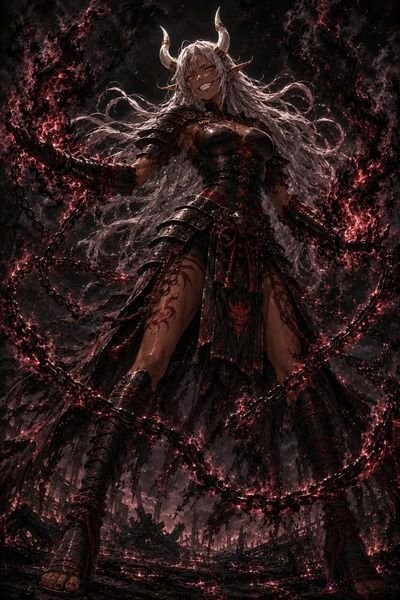
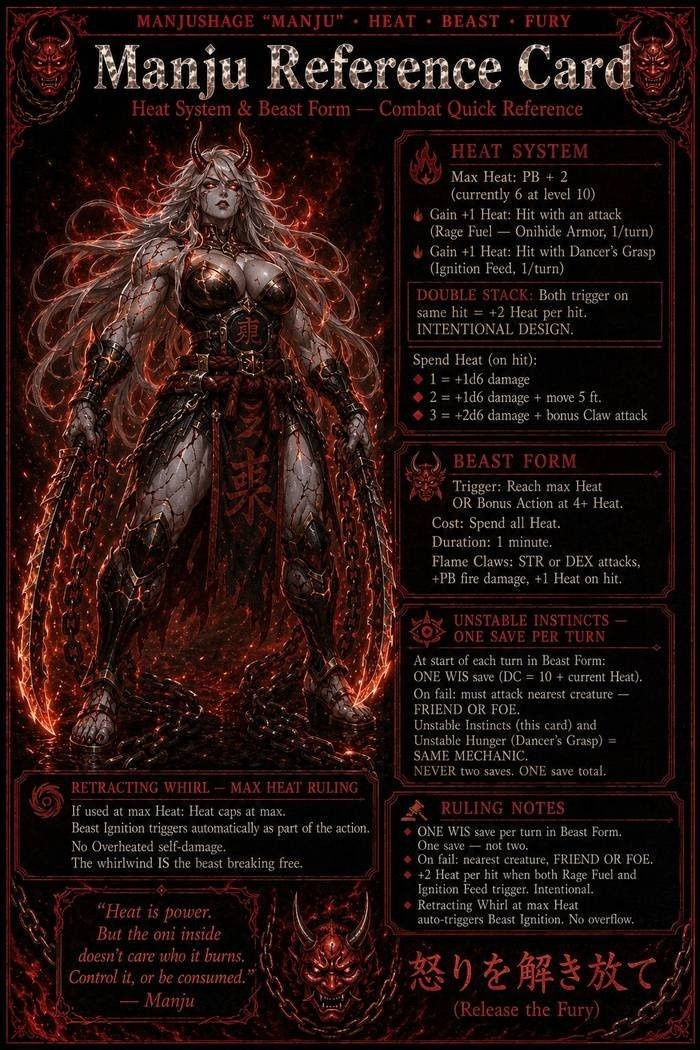
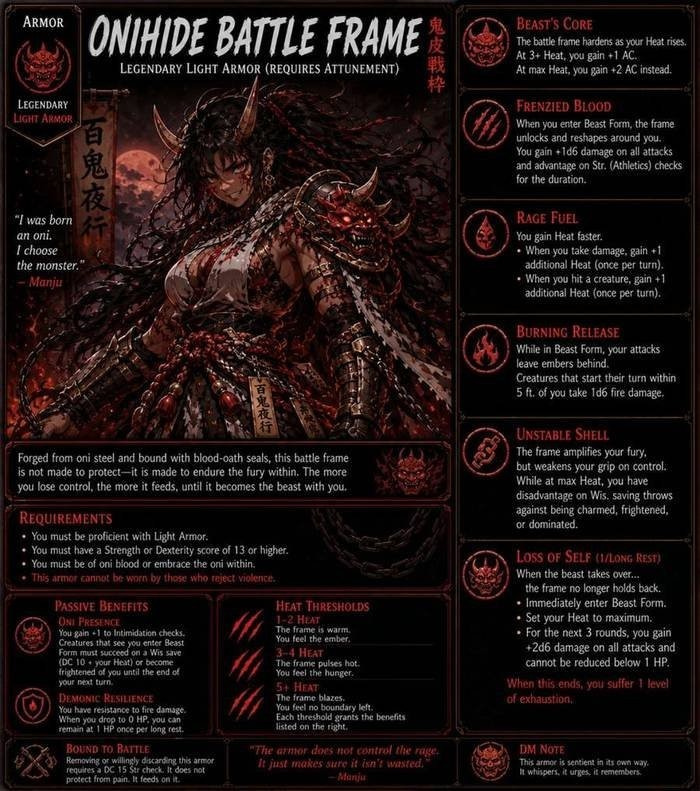
The fruit was on the body of the last person who had tried to claim it.
Manju stood over them in the wreckage of the Purgatory Market — three weeks of blood and knife-work to get here, three brokers dead, a route through the Crimson Hell that had cost her things she wouldn't count — and looked at the small, red, heart-shaped fruit and felt nothing resembling triumph.
She ate it standing up, in the rain, alone.
The fruit did not accept her.
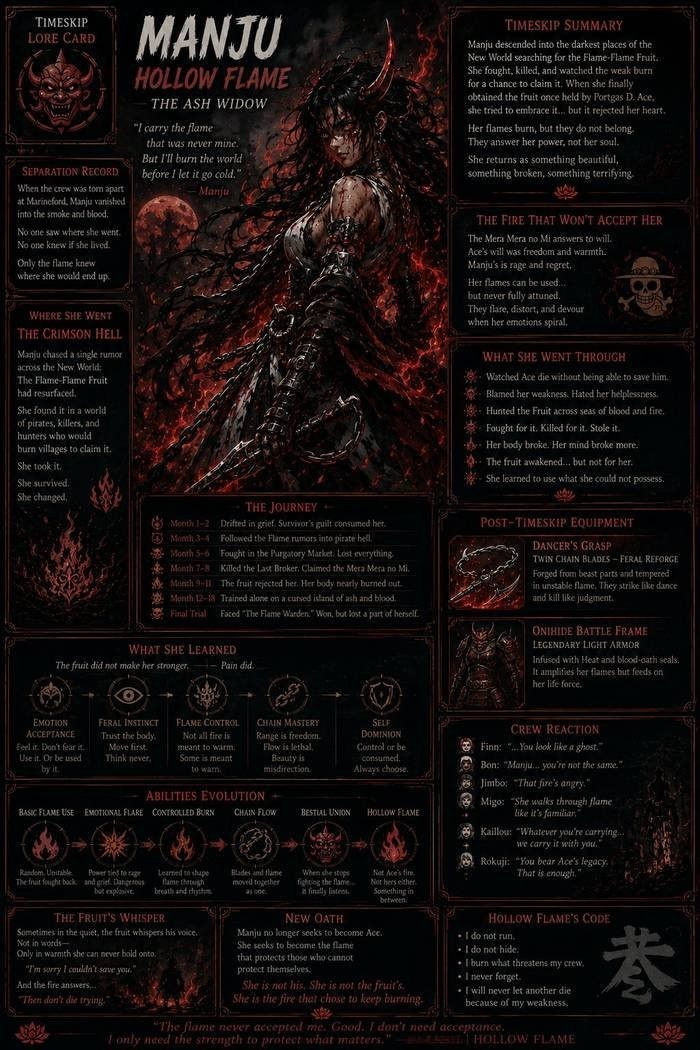
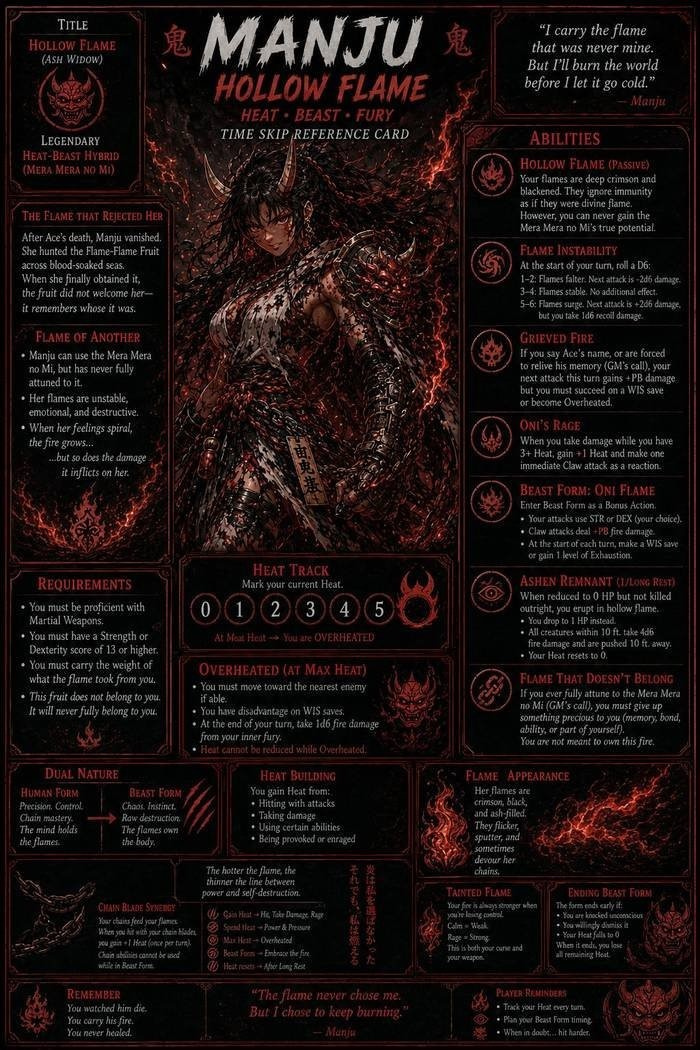
That was the only way to describe what happened. The Mera Mera no Mi awakened into the wrong hands and it knew it immediately. The flame came — volcanic, immediate, uncontainable — and then pulled back like a tide retreating from shore. Not fully. Never fully. But not completely present either, like a conversation between two people who had nothing to say to each other. Ace's will had been freedom and warmth. Manju's was rage and grief, and the fruit remembered the first owner in ways that the second could feel in the marrow of every attempt to call the fire.
She was not Ace. The fire was not hers. It burned anyway.
She found an island in month eleven. Uninhabited, according to the charts she'd taken off the last broker — volcanic, ashy, the kind of place that existed to be avoided. She went there to train in isolation. The fire was growing more unstable the more she pushed it. Each morning was its own question — whether the flames would falter or surge or turn on her entirely, and there was no predicting it, only responding to it. She needed to learn the rhythm before she could use it in combat without burning the wrong thing.
The forest went first.
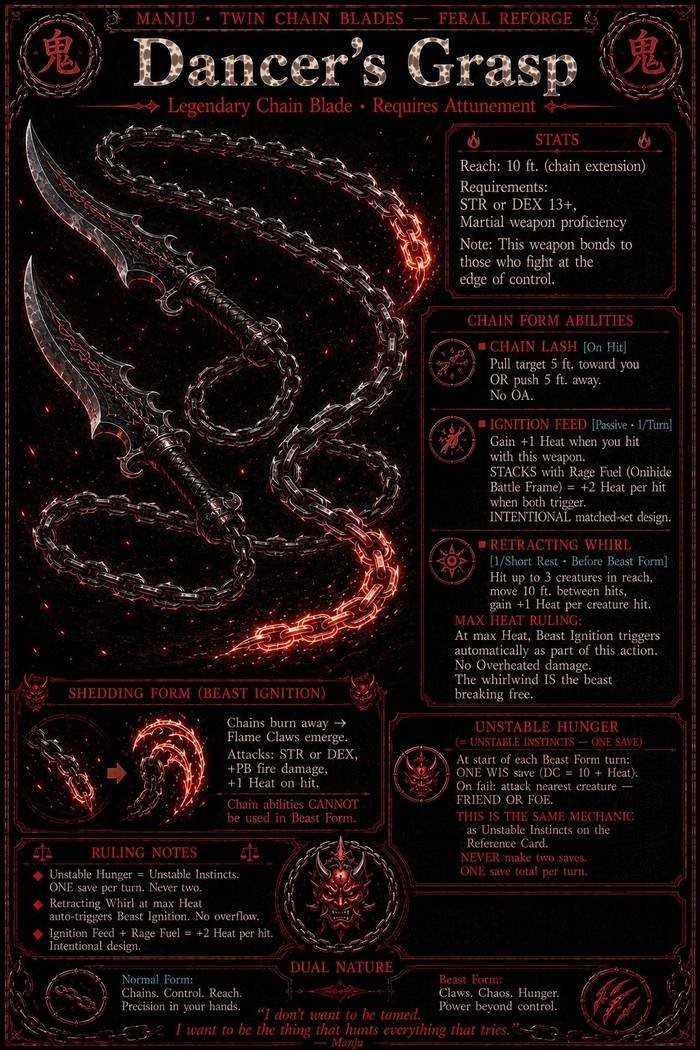
She had been drilling chain forms — Dancer's Grasp, the blade reforged from materials she'd gathered along the way, still new in her hands — when the grief came up without warning. She did not have control of it. She rarely did, in those months. The flames surged, the fire went wide, and by the time she'd pulled it back the tree line was gone.
She stood in the center of a clearing of ash and looked at what she'd done.
At the edge of the burn, half-collapsed, was a structure she hadn't known was there. Small — a shelter, built carefully from salvaged timber, the kind of thing that takes weeks of patient work and the specific knowledge of people who expected to be somewhere for a long time.
Inside it were four people. A family. They had been there before the fire.
She stood at the threshold for a long time. The rain came and put out what the flames hadn't finished. She didn't move. Couldn't make it mean anything that changed the fact of it. The fire had been hers. The instability had been hers. The control she hadn't had yet — hers.
She built a marker from the iron she carried. No inscription. Just the shape of an anchor, the way the crew used them — something planted to mark where you'd been, so the sea couldn't pretend it didn't happen.
She trained harder after that. Not with more force — with more restraint. The difference cost her more than force ever had.
The Flame Warden lived in the deepest part of the island's caldera — a creature made entirely of combustion, ancient, territorial, the reason the island was on no safe passage route anywhere. It did not communicate. It simply burned, the way that some things simply are what they are with no ambiguity about it.
She fought it for three days.
Not continuously — it would dissipate and reconvene, and she would rest and reconvene, and they would find each other again in the ash. By the third day she understood that she was not going to win by matching it. She was going to win by being the last one standing, which was a different kind of victory and a more honest one.
It dissolved on the evening of the third day and did not come back.
She stood in the caldera in the quiet afterward and felt the Hollow Flame settle for the first time into something that felt permanent rather than provisional. Not accepted — she was not the fruit's choice and never would be. But present. Hers, in the way that things you've paid for become yours regardless of whether they were meant for you.
She left the island as The Hollow Flame. She did not know who had given her that name — it traveled ahead of her somehow, the way names do in the New World when someone has done something that other people needed a word for.
The Hollow Flame's Code had no author and no ceremony. It simply became true, the way oaths become true: because you mean them and because you've already paid the price they require.
I do not run. I do not hide. I burn what threatens my crew. I will never forget. I will never let another die because of my weakness.
She did not seek to become Ace. She sought to become the flame that protected those who couldn't protect themselves.
The fruit still whispered sometimes. Not words — warmth she could never hold onto. She had stopped trying to hold it.
---