He came up out of the water alone.
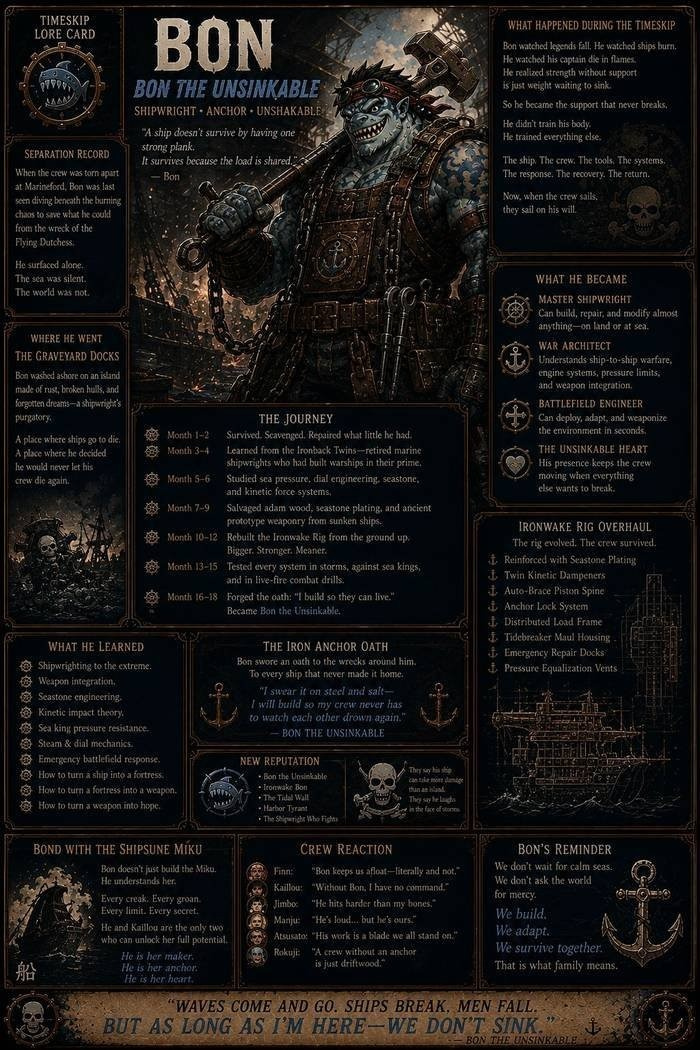
The Graveyard Docks didn't announce themselves. They appeared through the surface as he swam — first the shadow of rusted hulls, then the shapes of ships that had died in every possible way: fire, storm, cannon, time. An island built of them, layered over decades, the sea turning wreckage to geography. He hauled himself onto the nearest hull, looked around at the field of broken things, and made a decision immediately.
He would learn from every single one of them.
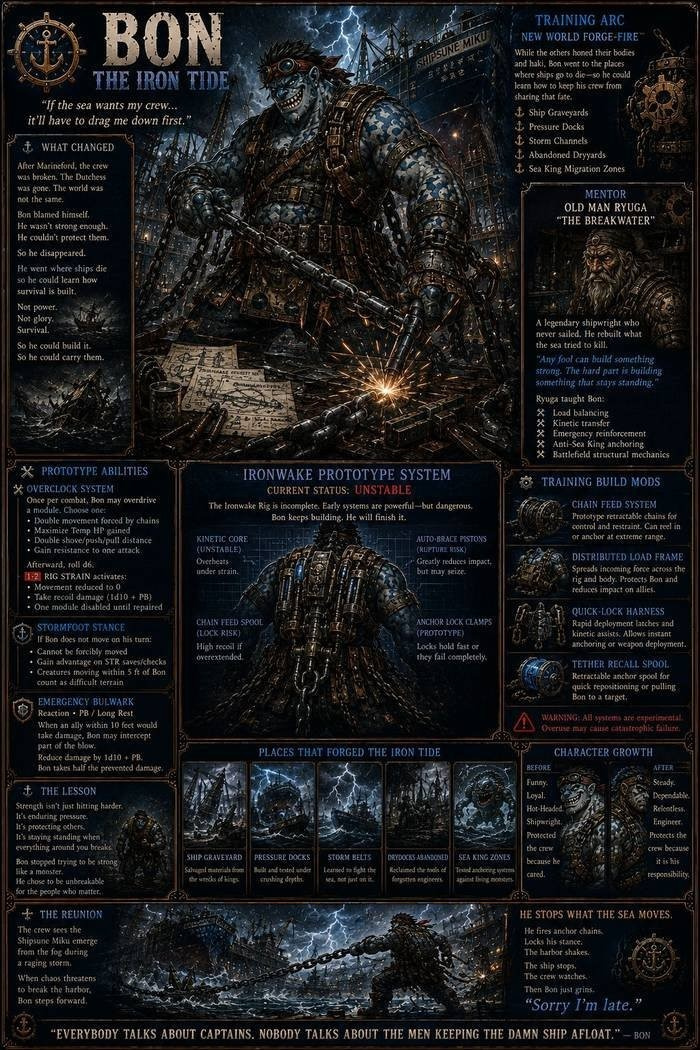
Old Man Ryuga — "The Breakwater" — found him on the second day, not because he was looking but because he heard the sound of Bon pulling iron off a wreck and wanted to know who was making that particular racket this far from anywhere.
"You're going to cut yourself," Ryuga said.
"Probably," Bon agreed.
Ryuga watched him work for another hour. Then he said, "You're doing it wrong. Every part of it." He picked up a pry bar, showed Bon the angle. "Load follows grain. You don't pull iron. You read where it wants to come from and you take it from there."
That was the beginning.
Ryuga had rebuilt things for fifty years — ships the sea tried to kill, hulls held together by stubbornness and structural principle, vessels that should have been lost and weren't because someone understood load distribution at a fundamental level. He had never sailed. He taught from a place that had no romance in it, only mechanics, only the question of whether a thing would hold under the force it would be asked to bear.
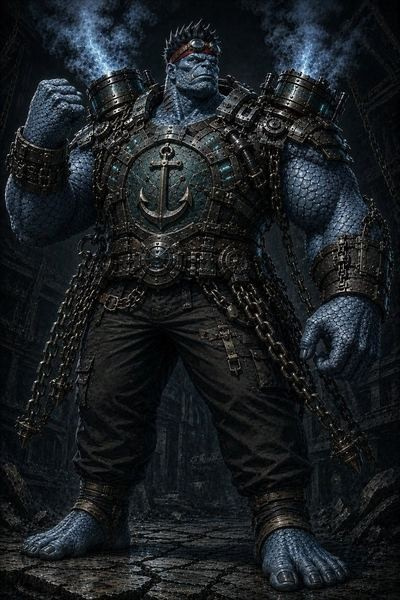
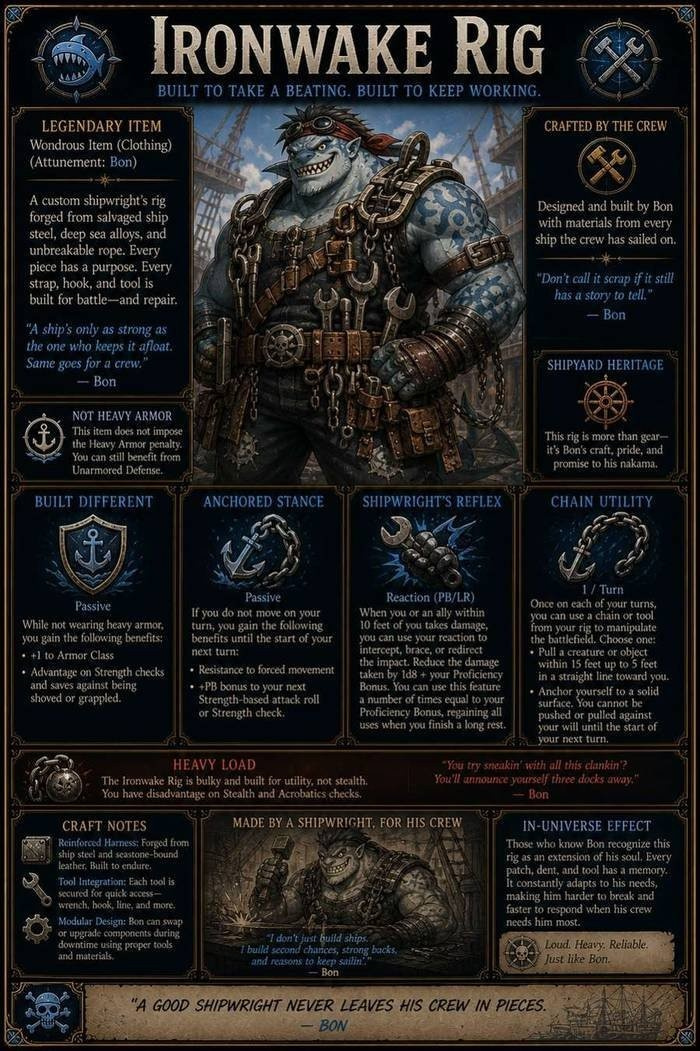
The Ironwake Rig, at the start of month one, was salvage. It had held at Marineford. It had not been enough. Every morning Bon looked at what he'd built and catalogued what had failed and why, and the list was honest and ugly.
He had been too slow. The Miku had been outrun. Rokuji had gone under while the ship he'd built watched.
He didn't talk about this with Ryuga. He didn't have to.
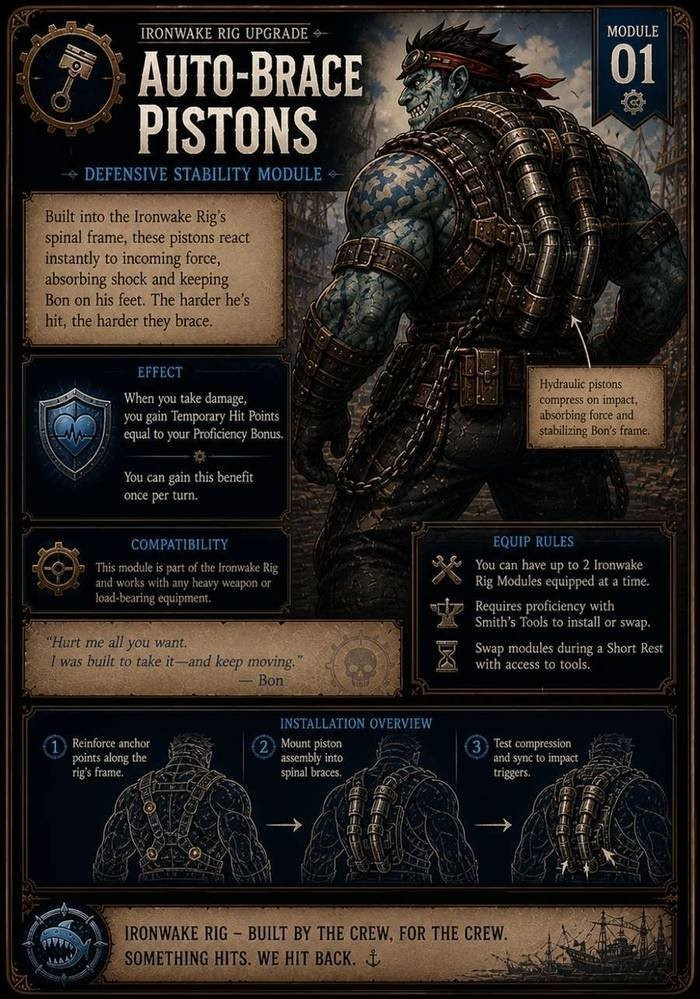
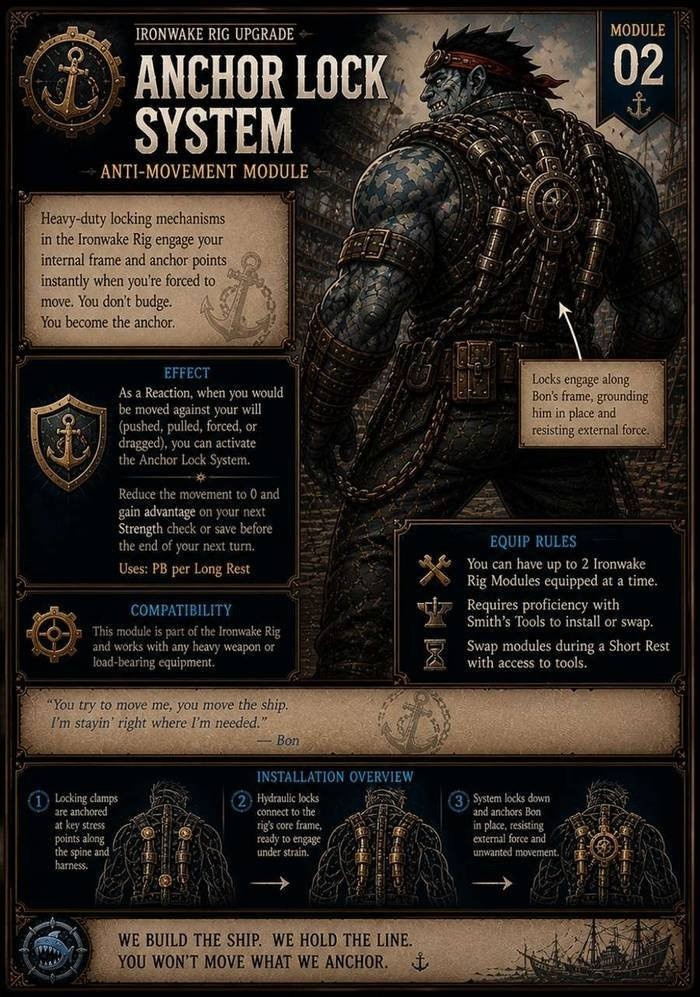
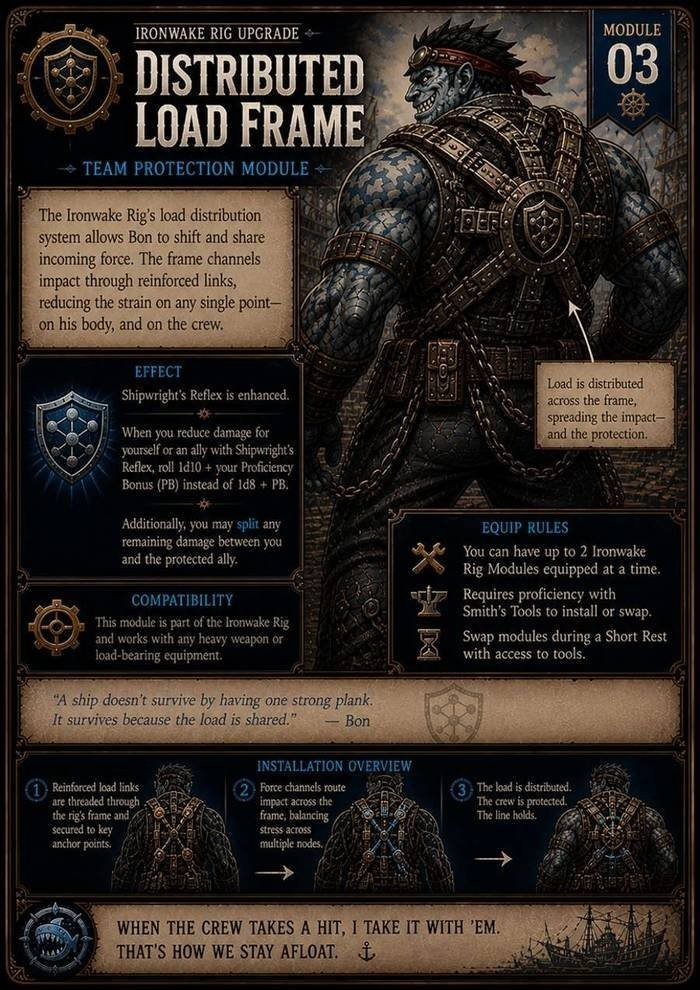
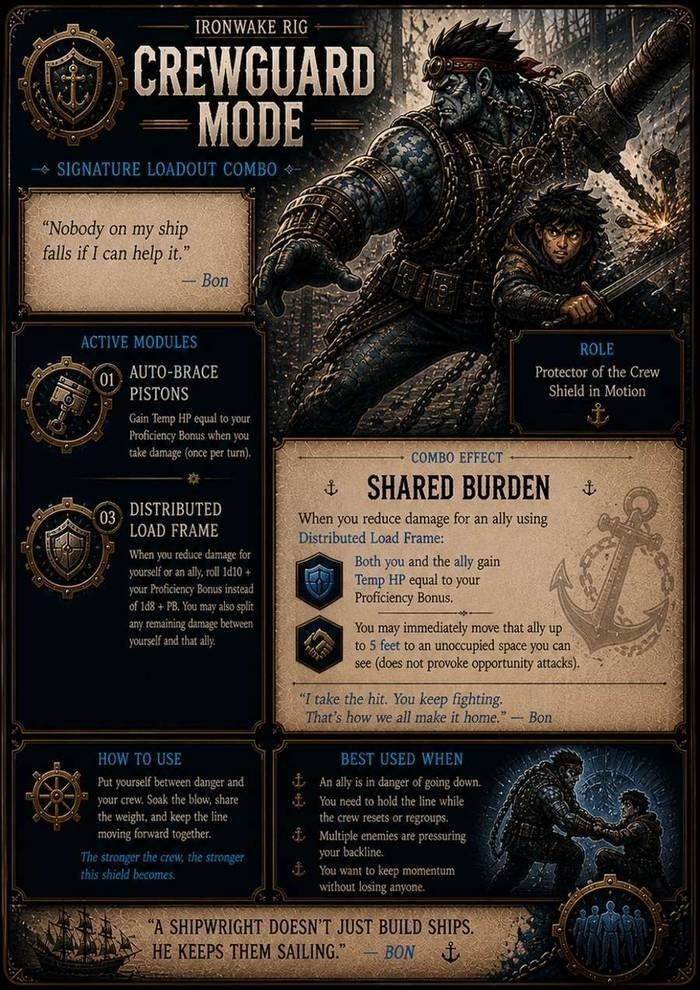
Month three: load balancing. The frame of the Rig restructured to distribute impact across multiple anchor points rather than concentrating it at the strongest sections. "A ship doesn't survive by having one strong plank," Ryuga told him. "It survives because the load is shared." Month six: kinetic transfer — learning to convert incoming force through the frame rather than simply absorbing it.
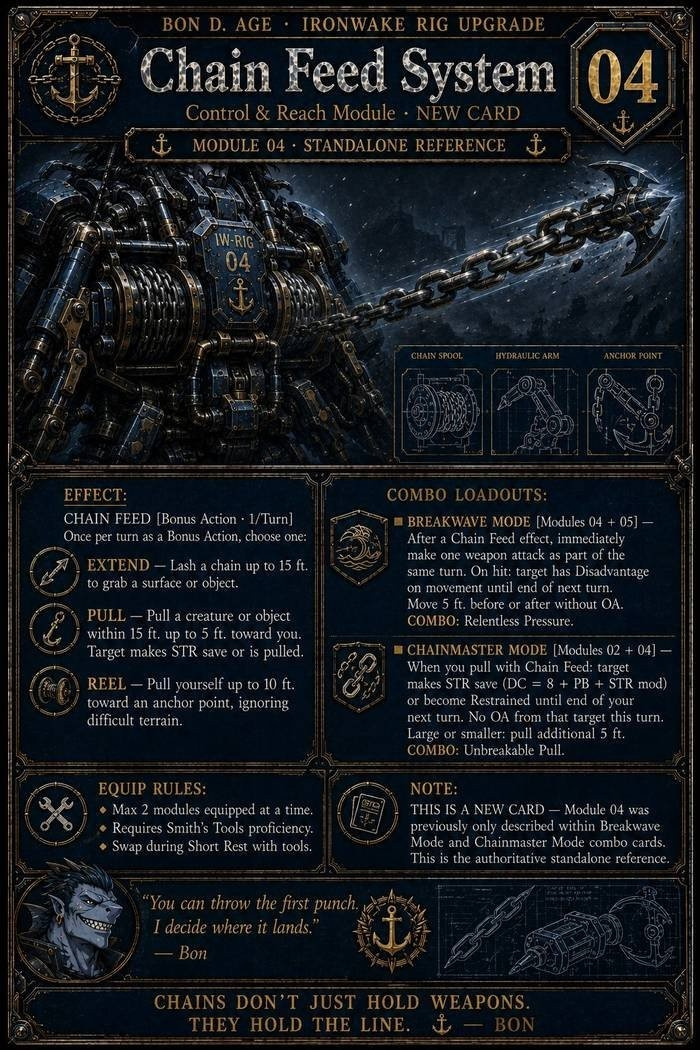
Month nine: seastone plating, harvested from wrecks where marines had used it for hull reinforcement, repurposed as armor lining. Month twelve: anti-Sea King anchoring theory, practiced against the actual sea kings that moved through the Graveyard at depth, testing the chains to failure and rebuilding them stronger after.
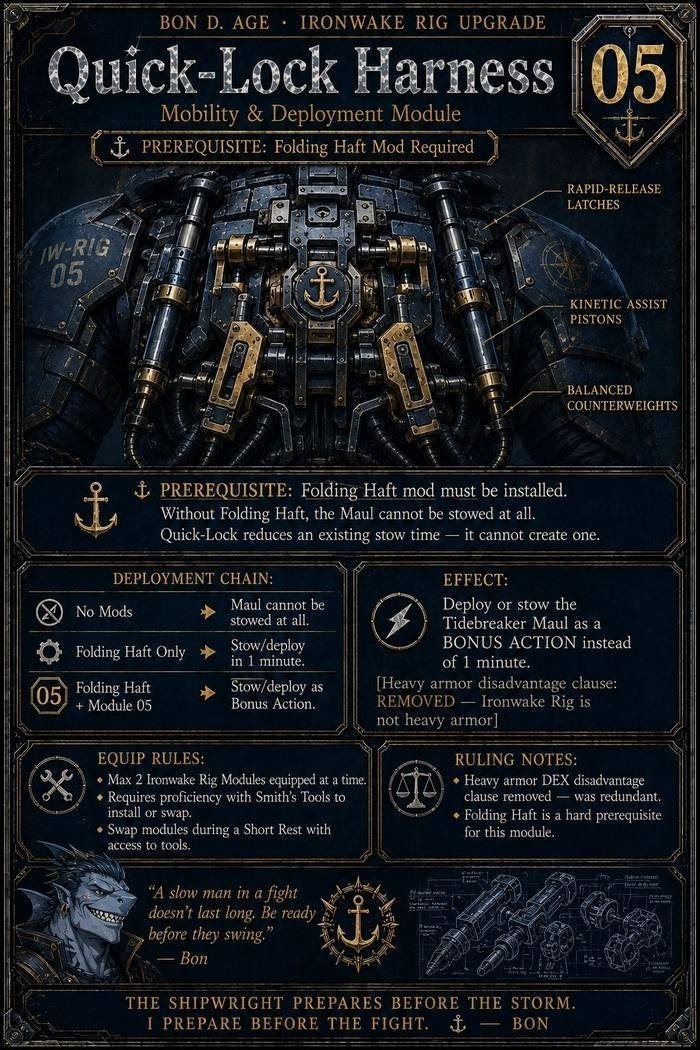
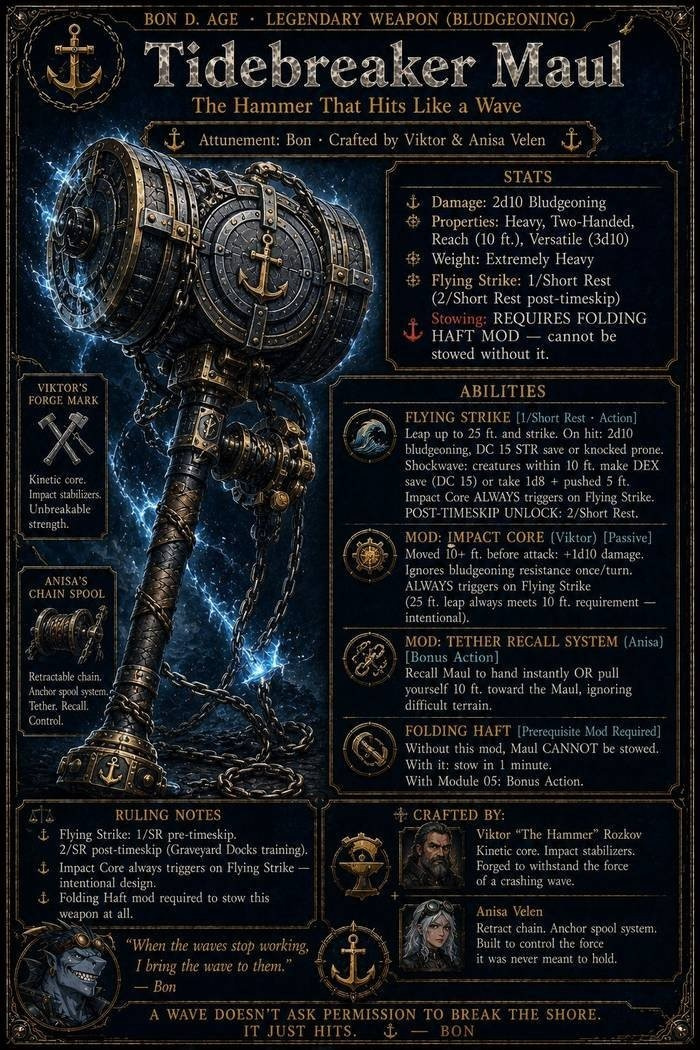
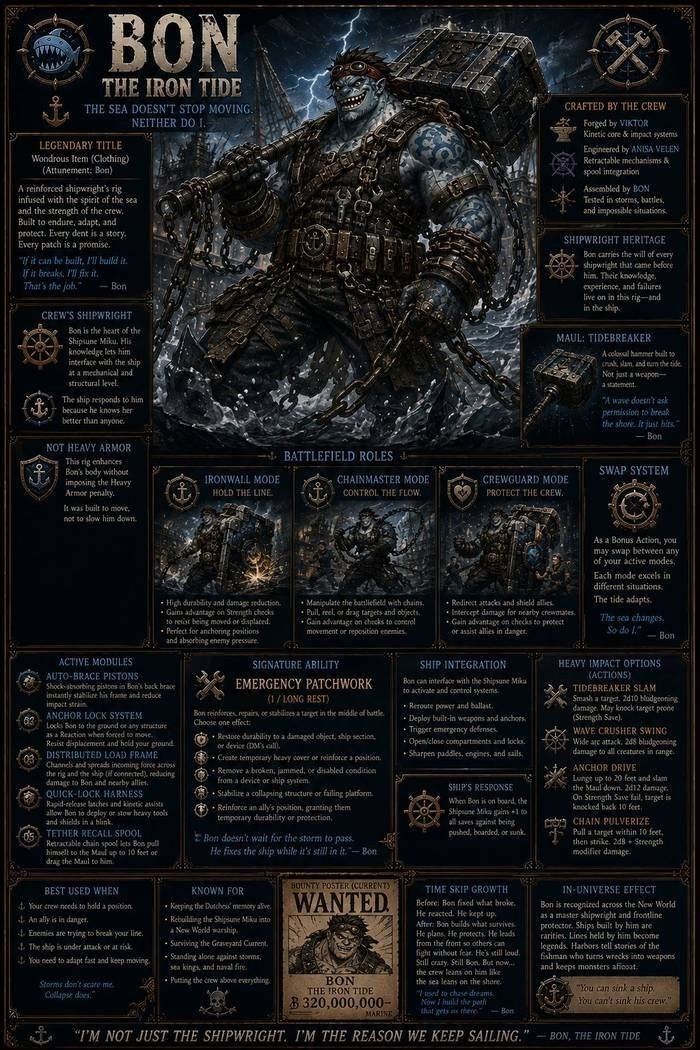
The rebuilt Tidebreaker Maul housing came at month fifteen. Ryuga said nothing about it being a weapon. He said it was a structural problem and they solved it structurally — a folding haft design, quick-lock mechanism, balance distribution that made something the size of a ship's capstan manageable for one person with the right frame support.
Month sixteen. Ryuga handed him a piece of iron salvaged from the deepest wreck in the Docks — something old, older than anything either of them could identify. No markings. Just density and the particular weight of things that had survived a very long time at depth.
"Make something worth swearing on," Ryuga said.
Bon spent two days. The result was the anchor — not decorative, real, functional, small enough to hold in a fist. He stood at the edge of the Docks in the dark, surrounded by the wrecks of a hundred ships, and said it out loud.
"I swear it on steel and salt — I will build so my crew never has to watch each other drown again."
Ryuga, somewhere behind him in the dark, said nothing. That was sufficient.
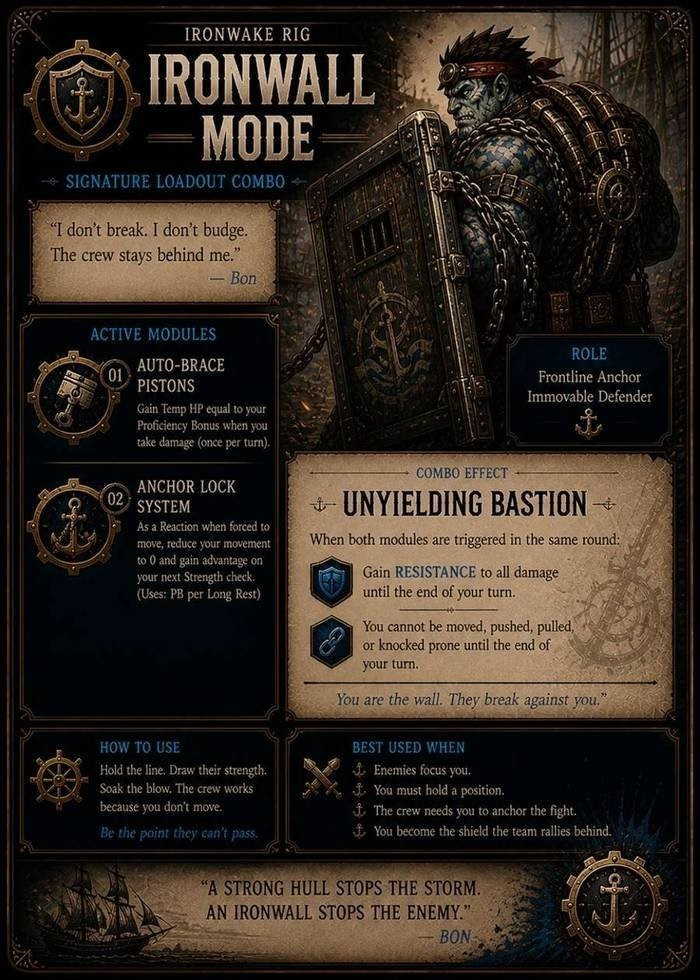
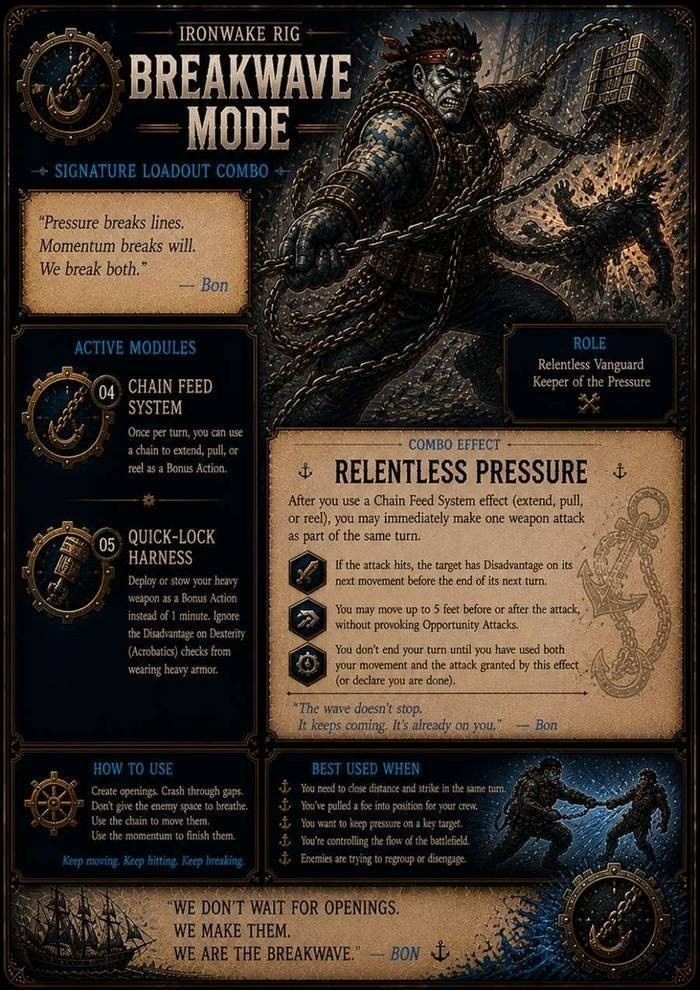
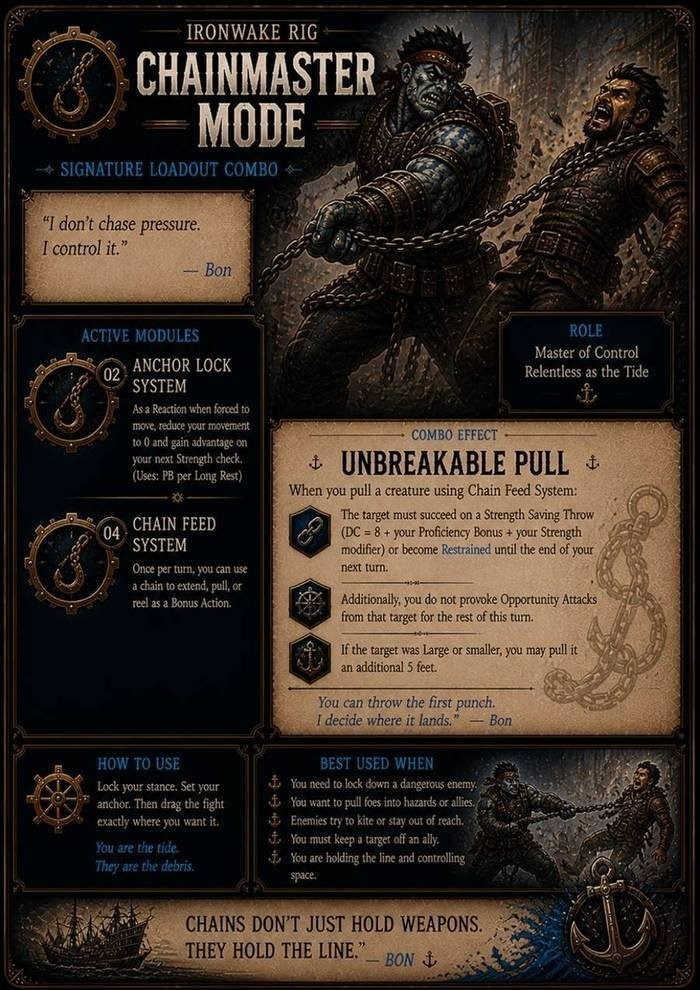
Month eighteen. The Rig was rebuilt from the ground up. Seastone lining. Kinetic dampeners at every joint. The chain systems integrated, the maul housing operational, Emergency Patchwork capability wired through the entire frame. It weighed more than it had before. He was faster in it.
He left without ceremony. Ryuga was already working on something else when he walked to the water's edge.
"Come back if you break it," Ryuga called after him.
"I won't break it," Bon said.
He heard the old man laugh — once, short. That was the closest Ryuga ever came to a compliment.
He swam out and started finding his way back toward where he knew the crew would eventually be. The load, he had learned, was the point. You didn't survive by being strong enough to carry it alone. You survived by being strong enough to make sure no one had to.
---